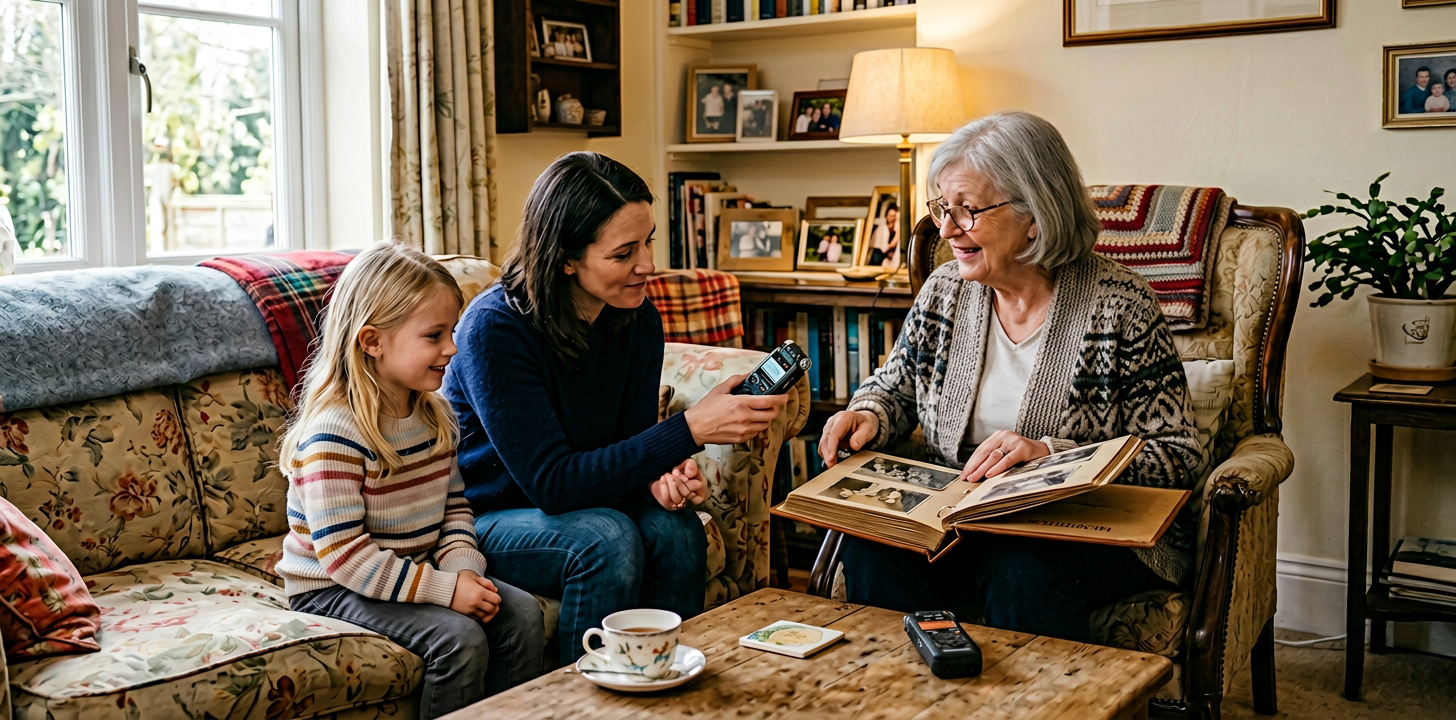
Saving family history is one of those things most people mean to do someday. Then life gets busy, boxes stay in closets, and the stories you meant to capture start fading a little more each year. The best way to save family history is not to wait for the perfect archive system, it’s to build a simple process that turns stories into something real, usable, and lasting.
If you’re helping a parent or grandparent preserve memories, especially when time or memory is becoming fragile, the goal is not perfection. It’s continuity. You want a method that captures voices, names, relationships, and personal details in a way future generations can actually enjoy.
Best Way to Save Family History Starts With Stories, Not Stuff
Most families begin with photos, letters, or keepsakes. Those matter, but they’re only half the story. A picture of a wedding dress is nice. The story of who made it, who wore it, and why it mattered is what makes it meaningful.
That’s why the best approach is to start with recorded conversations. When you hear someone tell their own story, you preserve tone, personality, and memory in a way that paper labels never can.
Why voice matters so much
A person’s voice carries emotion, humor, and rhythm. Even short interviews can preserve the feeling of someone’s presence, which is especially powerful for families dealing with aging or dementia.
What to capture first
Focus on the basics before diving into the details:
- Full name and nickname history
- Birthplace and childhood home
- Parents, siblings, and family roles
- Schools, jobs, moves, and milestones
- Traditions, recipes, faith, and holidays
- Love stories, lessons, and favorite memories
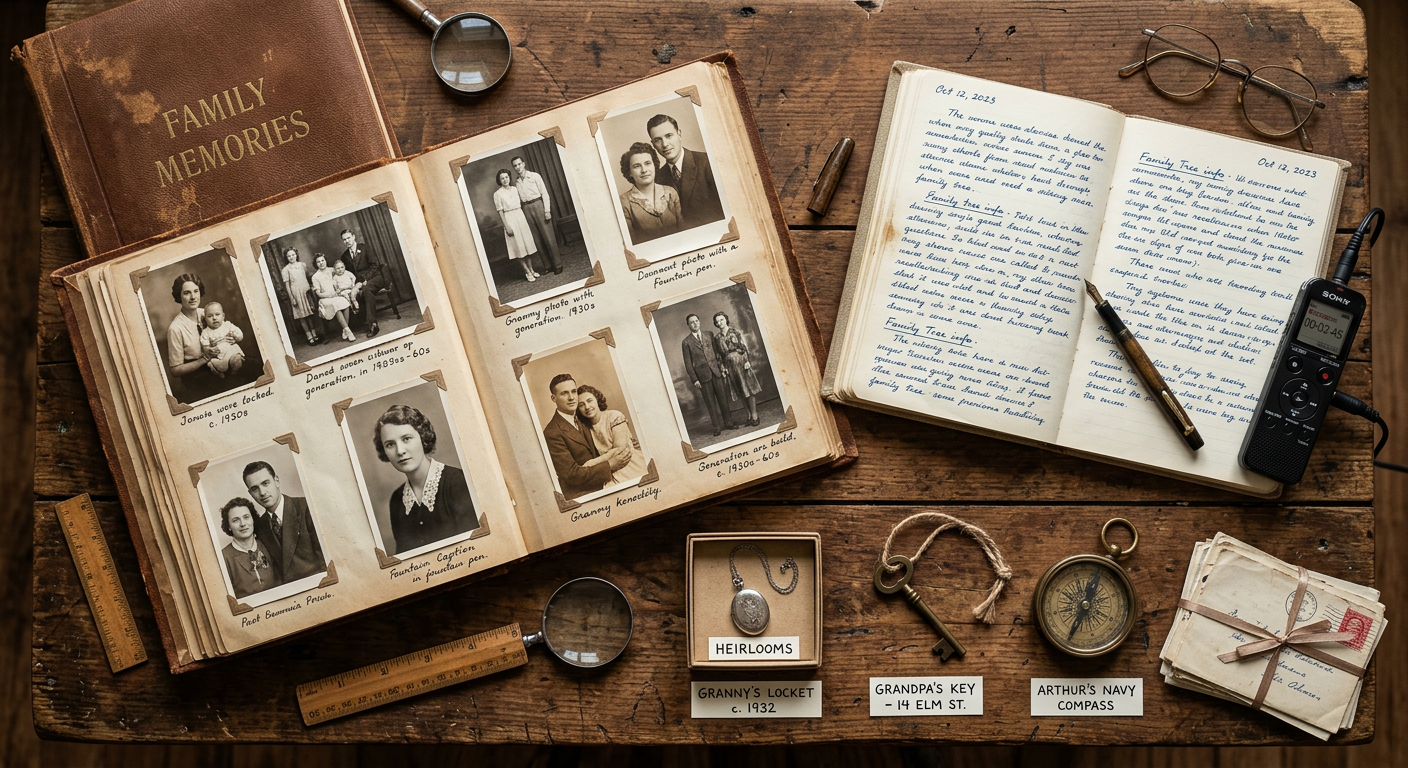
Use a Three-Part System That Actually Gets Finished
Here’s the thing, most family history projects fail because they’re too complicated. A better system is simple enough to finish and strong enough to last.
1. Record the conversation
Use guided interviews so the storyteller does not have to think of everything at once. Short sessions work better than one overwhelming marathon.
2. Transcribe and organize it
A transcript turns a conversation into something searchable and shareable. It helps family members find names, dates, and stories later without rewatching hours of audio.
3. Turn it into a polished memoir or archive
Once the stories are captured, shape them into a memoir, audio archive, or family legacy collection. That makes the history easy to pass down instead of leaving it scattered across devices and folders.
The Best Way to Save Family History Is to Make It Easy for Everyone
If the process feels too technical, it will get postponed. If it feels too formal, people will freeze up. The sweet spot is a guided experience that helps one person tell their story naturally while someone else handles the structure.
That’s one reason families like a service model that blends voice interviews, human coaching, and professional writing. It reduces the pressure on the storyteller and makes the final result feel finished, not half-done.
Why guided support works
- It keeps the conversation moving
- It helps with memory prompts and gentle follow-up questions
- It reduces the burden on adult children who are already caregiving
- It produces something polished enough to share with the whole family
If you want a more structured path, a service like LegacyStream AI can help turn recorded conversations into memoirs, transcripts, and audio archives without you having to manage every step alone.
What to Preserve Besides the Story Itself
Family history is more than a timeline. The small details are often what future generations treasure most.
Don’t skip these essentials
- Favorite sayings and family jokes
- Recipes and holiday traditions
- Military service, immigration, or career changes
- Houses, towns, and neighborhoods that shaped the family
- Lessons learned the hard way
- Childhood memories and family legends
These details give the story texture. Without them, family history can feel generic. With them, it feels alive.
A Better Option Than Scattered Files
A lot of families already have bits and pieces saved on phones, in cloud folders, or in old boxes. The problem is access. Years from now, nobody may know where anything is stored or how to open it.
A more durable solution is to create one central legacy package. That can include:
- A written memoir
- Audio recordings
- Transcripts
- A photo and document index
- A family memory vault
- A shareable finished book or article
That way, the stories are not just saved, they’re usable.
How to Start This Week
You do not need a huge project plan. Start small and keep going.
A simple first-week plan
- Pick one storyteller
- Choose five life chapters to explore
- Record one short session
- Save the photos or documents mentioned in the conversation
- Write down names and dates while they are still fresh
- Decide where the finished story will live
The key is momentum. Once the first story is captured, the rest gets easier.
FAQ
What is the safest way to save family history?
The safest approach is to keep both digital and readable formats. Record audio, save transcripts, and store finished files in more than one place so the story is not lost if one device fails.
Is audio or written memoir better?
Both are valuable. Audio preserves the voice and emotion of the storyteller, while a written memoir is easier to read, search, and share. The strongest family archives usually include both.
What if my parent does not like being interviewed?
Keep it informal. Start with easy memories like childhood games, first jobs, or holiday traditions. A guided, conversational approach feels less like an interview and more like a story exchange.
How do I preserve family history when someone has memory loss?
Focus on what they can still remember comfortably. Short sessions, familiar prompts, photos, and gentle follow-up questions can help. The goal is not to test memory, it’s to capture what remains with dignity and care.
How long should a family history project take?
It depends on the depth you want, but it does not need to take months before you begin. Even a few sessions can preserve powerful memories and create a meaningful first version.
What should I save first?
Start with names, dates, relationships, and major life events. Then add stories, traditions, and personality details. That combination gives the strongest foundation for a lasting family record.
Make It Happen Before the Stories Fade
The best way to save family history is to capture it while the people who lived it can still tell it. You do not need fancy equipment or a perfect writing skill set. You need a simple system, a little support, and the willingness to begin.
If you want help turning family conversations into something lasting, explore LegacyStream AI. It can help you preserve the voice, memory, and meaning of a life story before it slips away.
Final Thought
Family history is not really about archives. It’s about love, identity, and giving future generations a way to know where they came from. Start with one conversation, and you may end up saving far more than a story.
Ready to preserve your story?
LegacyStream AI guides you through creating a beautiful, permanent book — with real human coaches and AI-powered writing assistance.
Start Your Book Today