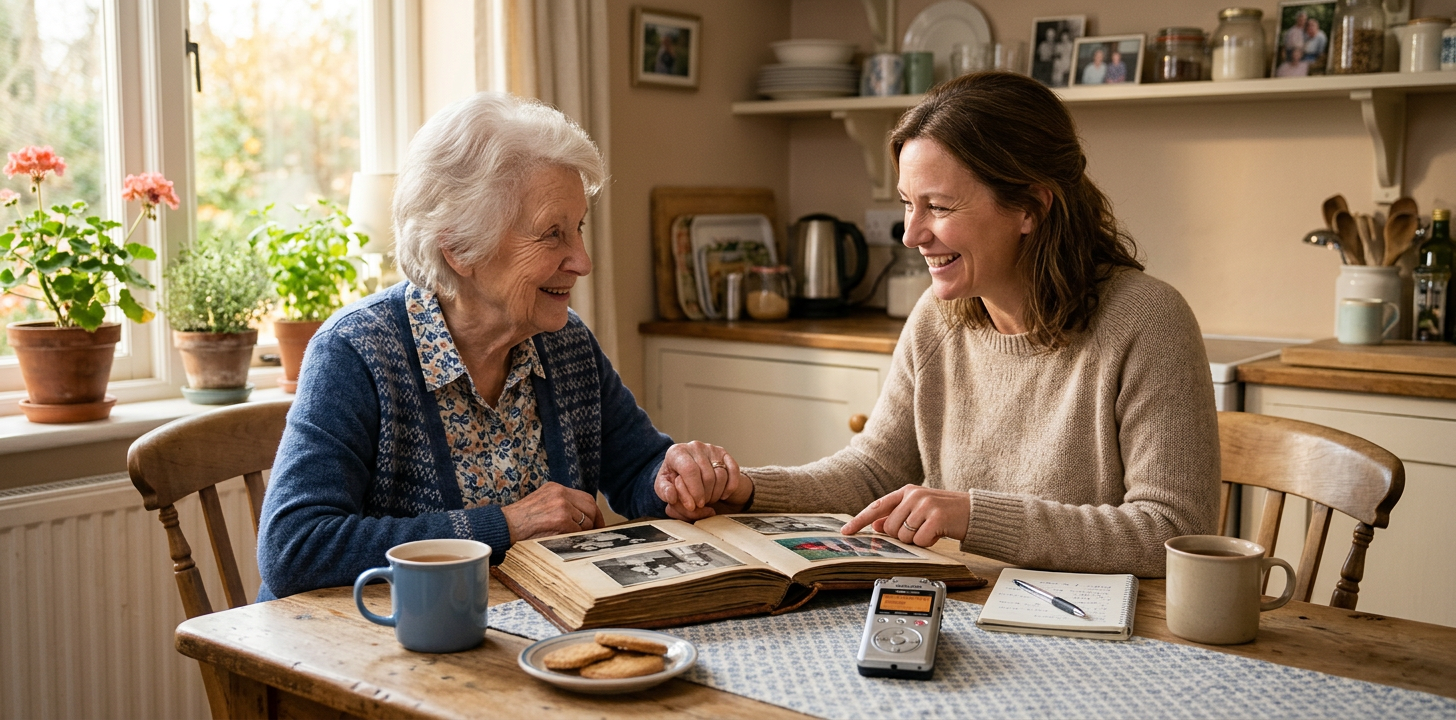
When you sit down with a parent or grandparent, the hardest part is often not the listening. It’s knowing where to begin. A simple, thoughtful question can unlock a memory that has been tucked away for decades, and that’s where the real magic happens.
If you’ve been looking for interview questions for elderly parents, you’re probably not just trying to make conversation. You want to preserve family history, capture wisdom while it’s still vivid, and create something your kids, siblings, and future generations will treasure. The good news is that you do not need to be a trained interviewer to do it well.
Why These Conversations Matter
A life story is made of ordinary details, not just the big milestones. The name of a childhood street. The taste of a favorite meal. The advice they wish someone had given them earlier. These are the memories that become priceless later.
That’s especially true for families dealing with memory loss or dementia. Even if a parent can’t recall everything, a calm, familiar conversation can still surface meaningful stories, emotions, and moments of connection. For many families, this kind of interview becomes both a keepsake and a gift.

How to Ask Questions Without Making It Feel Like an Interview
Start small. Think of the conversation as a relaxed visit, not a formal Q and A session. You’ll usually get better answers when the person feels safe, respected, and unhurried.
A few helpful tips:
- Ask one question at a time.
- Give them space to pause and think.
- Follow their lead if a memory opens up.
- Use photos, music, or keepsakes as prompts.
- Record the conversation if they’re comfortable with it.
Here’s the thing, the best questions are usually the ones that sound simple but invite a story.
45 Interview Questions for Elderly Parents
Childhood and Family Roots
- What was your home like when you were growing up?
- Who was the strictest person in your family?
- What chores did you have as a kid?
- What did your parents do for work?
- What is one thing you remember most about your mother or father?
- Did your family have any special traditions?
- What was a typical Sunday like in your house?
School and Early Independence
- What was school like for you?
- Who was your favorite teacher, and why?
- Did you have a subject you loved or hated?
- What did you want to be when you were young?
- Did you ever get into trouble at school?
- What was your first job?
- What did you buy with your first paycheck?
Teen Years and First Big Decisions
- What were your teenage years like?
- Who were your closest friends growing up?
- What music, movies, or trends did you love?
- What was your first car or first big purchase?
- What moment made you feel grown up?
- Did you ever take a risk that changed your life?
Love, Marriage, and Partnership
- How did you meet your spouse or partner?
- What did you notice first about them?
- What was your wedding day like?
- What advice would you give a young couple today?
- What did you learn about love over time?
- What was the hardest season you went through together?
Work, Home, and Daily Life
- What kind of work felt meaningful to you?
- Did you ever have a job you’ll never forget?
- What was the best house or neighborhood you ever lived in?
- What was family life like when we were little?
- What routines made your days feel steady?
- What is something you worked hard to provide for your family?
Hard Times and Resilience
- What was one of the hardest moments in your life?
- How did you get through it?
- Was there a time you had to start over?
- What did you learn from a mistake or setback?
- Who supported you during difficult times?
- What helped you keep going?
Joy, Hobbies, and Personality
- What have you always loved doing just for fun?
- What hobby or skill are you most proud of?
- What makes you laugh no matter what?
- What food or smell instantly reminds you of home?
- What’s a favorite family memory that still makes you smile?
- If you had a free day with no obligations, how would you spend it?
Wisdom and Legacy
- What do you want your family to remember most about you?
- What advice do you wish you had followed sooner?
- What are you proudest of in your life?
- What values do you hope passed down to the next generation?
- What does a good life mean to you?
- Is there anything you want to tell your children or grandchildren now?
How to Make the Stories Easier to Capture
You do not need perfect wording. In fact, the more natural the conversation feels, the better. If your parent starts telling a story about a neighbor, a holiday, or a childhood pet, follow that thread. Some of the richest memories appear when people are not trying to “perform” for the recorder.
A few ways to improve the experience:
- Use old photos to spark memory.
- Keep sessions short, especially if energy fades quickly.
- Pick a quiet time of day when they feel most alert.
- Avoid correcting small details unless it truly matters.
- End on a positive, easy question.
If you’re working with someone who has dementia or memory challenges, consistency helps. Repeating a familiar setting, voice, or routine can make the process feel comforting instead of stressful.
What to Do With the Answers
Once you’ve gathered the stories, don’t let them sit on your phone forever. Turn them into something real. That could be a written memoir, a transcript, a family archive, or a private audio collection.
This is where services like LegacyStream AI can help. If you want a guided way to turn family conversations into polished keepsakes, a structured memoir project can save time and reduce overwhelm. You get the story, but you also get something your family can actually read, listen to, and pass down.
FAQ
What if my parent doesn’t like being interviewed?
Keep it casual. Start with one or two easy questions during a normal visit, and let the conversation grow naturally. Sometimes people open up when they forget they are being “interviewed.”
How long should a session be?
Fifteen to thirty minutes is often enough. Short sessions usually work better than trying to cover everything in one sitting.
What if they repeat the same stories?
That’s normal, and it can still be valuable. Repeated stories often hold the memories that matter most, and small variations can reveal new details.
Should I record the conversation?
If your parent is comfortable with it, yes. Audio or video recording makes it much easier to preserve tone, emotion, and small details that are hard to capture in notes.
What are the best questions for a parent with memory loss?
Stick to familiar topics like childhood home, favorite meals, traditions, music, and family routines. These often feel safer and more accessible than broad or abstract questions.
How do I keep the conversation from feeling awkward?
Use warm follow-up questions like “What happened next?” or “How did that feel?” A little curiosity goes a long way.
Start Preserving the Stories Now
You do not need the perfect script. You just need a starting point, a little patience, and a willingness to listen. The best interview questions for elderly parents are the ones that open a door, then let the story unfold.
If you want help turning those conversations into something lasting, visit LegacyStream AI. It’s an easy way to preserve a parent’s voice, capture family history, and create a legacy your family will actually keep.
Final Thought
The stories you save today may become the stories your family treasures forever. Start with one question, one memory, one conversation, and you may be surprised by how much love, wisdom, and history comes back to life.
Ready to preserve your story?
LegacyStream AI guides you through creating a beautiful, permanent book — with real human coaches and AI-powered writing assistance.
Start Your Book Today